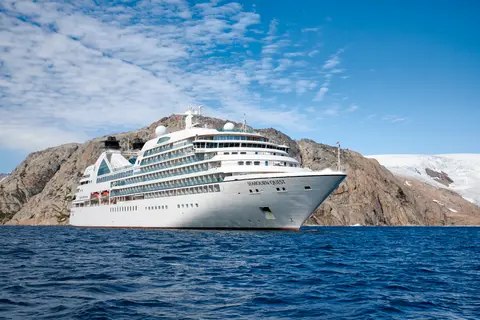
Seabourn6673B
23-Day Turkey, Greece & Andalusia
Date
2026-10-18
Duration
23 nights
Departure Port
Istanbul
Turkey
Arrival Port
Lisbon
Portugal
Rating
Luxury
Theme
—
Date
2026-10-18
Duration
23 nights
Departure Port
Istanbul
Turkey
Arrival Port
Lisbon
Portugal
Rating
Luxury
Theme
—







Seabourn
2011
—
32,000 GT
450
225
330
650 m
26 m
19 knots
No

For more than fifteen centuries, Istanbul has been the pivot upon which empires turned — Byzantium, Constantinople, the Ottoman capital — and nowhere else on earth compresses so much history into a single horizon. The Hagia Sophia, the Blue Mosque, and the Topkapi Palace form an incomparable trinity of architectural genius along the Golden Horn; the Grand Bazaar's four thousand shops offer a sensory immersion unlike any other marketplace. Must-dos include a Bosphorus sunset cruise and a meal of mezze along the waterfront at Karaköy. Spring (April–May) and autumn (September–October) offer the most gracious climate for this inexhaustible city.
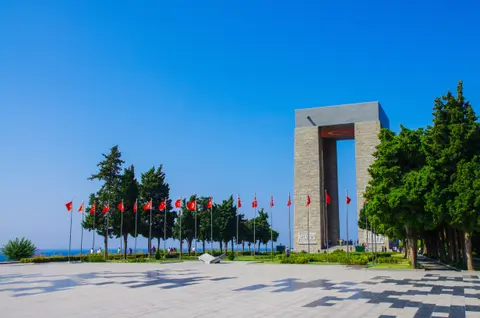
Çanakkale is a vibrant Turkish university town commanding the Dardanelles strait, serving as the gateway to ancient Troy and the Gallipoli battlefields—two of the most emotionally powerful historical sites in the world. Must-dos include the Troy archaeological site and museum, Gallipoli memorials, and waterfront meyhane dining with fresh Dardanelles seafood. April through October is ideal, with spring best for Anzac Day and wildflower-covered battlefields.

Seattle, the Pacific Northwest's rain-kissed metropolis, commands one of America's most spectacular urban settings — a skyline of glass towers reflected in Elliott Bay with the white cone of Mount Rainier presiding over the horizon on clear days. Pike Place Market, one of the oldest and most vibrant public markets in the country, overflows with Dungeness crab, wild salmon, and blooms of tulips from the Skagit Valley. The neighbourhood of Capitol Hill pulses with independent bookshops and craft breweries; the Space Needle delivers sweeping views of the Cascades and the Olympic Peninsula. Summer, from June through September, offers Seattle's most generous sunshine.
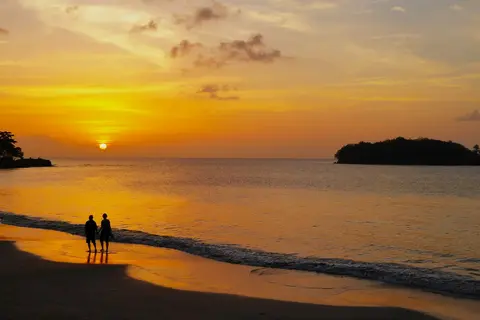
Castries, the capital of St. Lucia, is a vibrant port steeped in history and culture, offering stunning architecture and a lively market atmosphere. Must-do experiences include savoring the national dish, green fig and saltfish, and exploring the picturesque Marigot Bay. The best time to visit is during the dry season from December to April, when the weather is perfect for exploring this Caribbean gem.
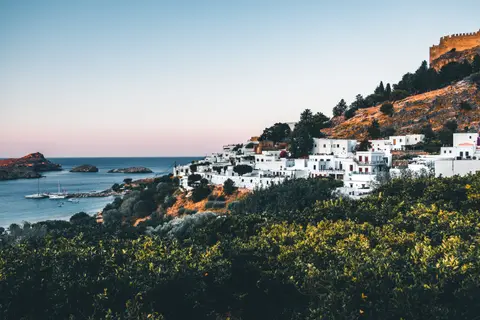
Rhodes, Greece's resplendent Dodecanese jewel, merges a UNESCO-listed Medieval Old Town built by the Knights of St. John with sun-soaked Aegean beauty just seven miles from the Turkish coast. Wander the Street of the Knights before tasting *pitaroudia* fritters and local Athiri wine at an Old Town taverna, then take a catamaran to the neoclassical harbor of Symi. The island basks in over 300 days of sunshine annually, with April through June and September through October offering ideal temperatures for exploration without the peak-summer crowds.
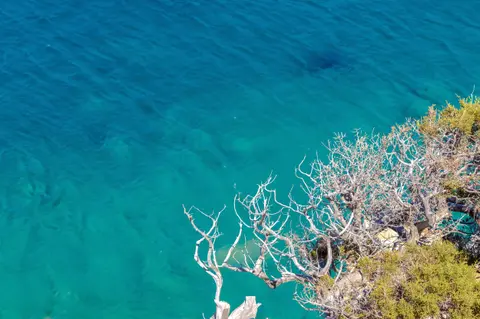
Spetses is an aristocratic Saronic Gulf island renowned for its neoclassical mansions, car-free harbour, and heroic role in the Greek War of Independence under the legendary Bouboulina. Must-dos include visiting the Bouboulina Museum, swimming at Agioi Anargyroi beach, and lingering at the Dapia's waterfront cafés. May through October offers perfect conditions, with the September Armata festival providing a spectacular historical reenactment.
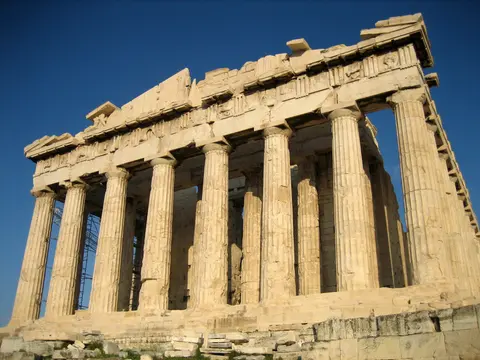
Piraeus, the bustling port city of Athens, is a vibrant blend of ancient history and modern charm, inviting travelers to explore its rich culture. Must-do experiences include savoring traditional Greek dishes at the Varvakeios Agora and embarking on day trips to nearby islands like Symi and Nydri. The best time to visit is during the spring and fall when the weather is pleasant and the tourist crowds are fewer.
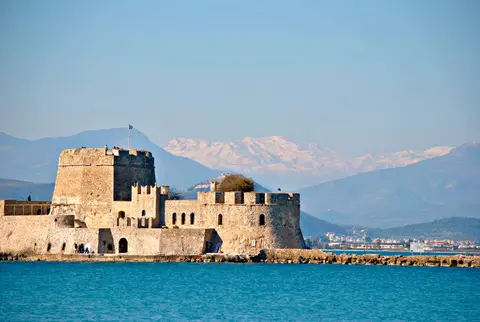
Nafplion, the first capital of modern Greece, is a refined Peloponnesian port town where Venetian architecture, Byzantine churches, and neoclassical elegance converge along one of the Mediterranean's most beautiful waterfronts. Climb the 999 steps to the Palamidi Fortress for commanding views of the Argolic Gulf, then descend for an afternoon tasting Agiorgitiko wines in the nearby Nemean valley. The best months to visit are April through June and September through October, when mild temperatures and fewer crowds allow the town's intimate charm to shine.
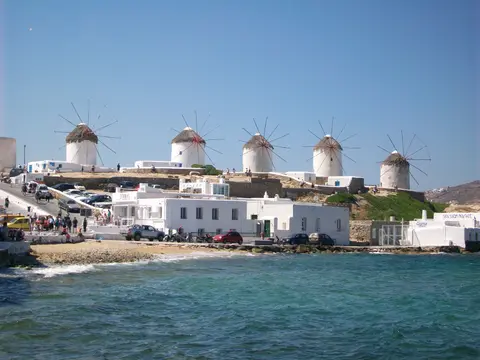
Katakolon is the unassuming port that holds an extraordinary secret: just fourteen kilometres inland lies ancient Olympia, birthplace of the Olympic Games and one of the most sacred sites in the ancient world. The Archaeological Museum of Olympia — housing the breathtaking sculptures from the Temple of Zeus — ranks among Greece's finest, while walking the original stadium still sends a current of wonder through even the most seasoned traveller. The village itself charms with whitewashed tavernas and a relaxed pace that feels authentically Greek. Katakolon is best visited April through October; late spring and early autumn offer ideal temperatures for the Olympia excursion.
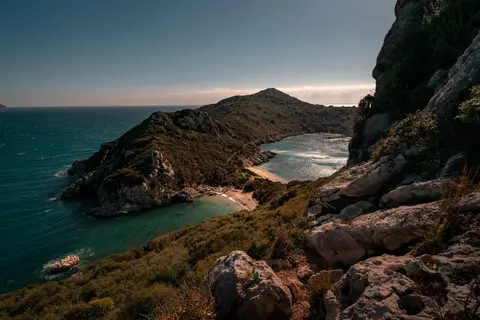
Where Homer placed the island of the Phaeacians and four centuries of Venetian rule left their most enduring Mediterranean legacy, Corfu is a singular island of extraordinary historical depth and natural beauty. The UNESCO-listed Old Town — its narrow Kantounia alleyways, the elegant Liston arcade, and twin Venetian fortresses — is the finest preserved Venetian streetscape in Greece. Beyond the town, secret coves, olive groves of immense antiquity, and mountain villages offer weeks of unhurried discovery. May through June and September offer perfect conditions: warm sea temperatures, clear skies, and the island before or after its summer crescendo.
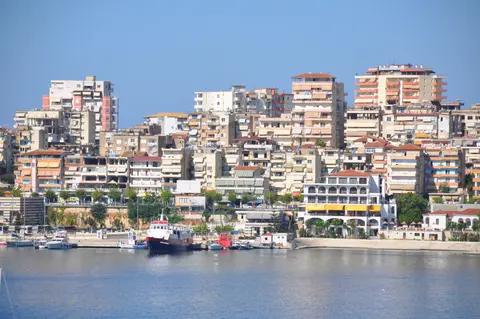
Sarandë is Albania's Ionian coast jewel, where the UNESCO-listed Butrint archaeological marvel and the impossibly turquoise Blue Eye spring create a Mediterranean experience rivaling Greece at a fraction of the cost. Visit June via Emerald Yacht Cruises or Virgin Voyages for six-civilization archaeological sites and Albania's exciting Mediterranean frontier.
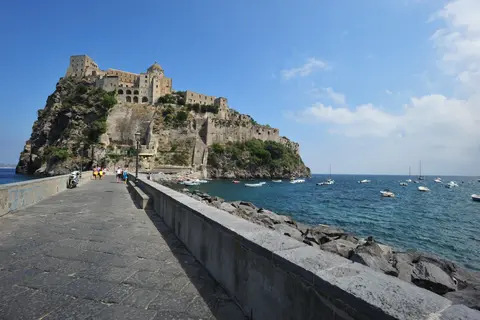
Naples — Napoli — is Europe's most operatically alive city, a sun-battered baroque metropolis where Vesuvius broods on the horizon and the streets below pulse with 2,500 years of continuous human drama. The unmissable Museo Archeologico Nazionale houses the world's finest collection of artefacts from Pompeii and Herculaneum, while the Spaccanapoli, the arrow-straight artery that has bisected the city since Greek times, delivers an unfiltered encounter with Neapolitan life. A single slice of pizza Margherita from one of the centro storico's historic pizzerias is a culinary pilgrimage in itself. Visit between April and June or September and October for warmth, manageable crowds, and the city at its golden best.
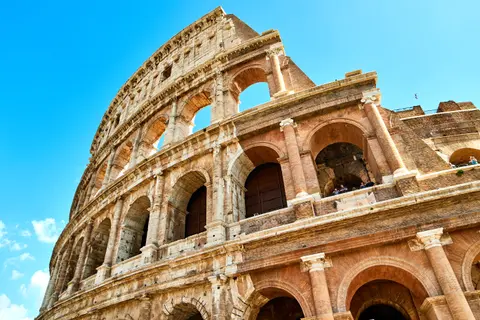
Rome's ancient maritime gateway since the Emperor Trajan commissioned its harbour in 106 AD, Civitavecchia is the natural prologue to the Eternal City — just seventy minutes southeast by express rail. The port's Renaissance fortress, designed in part by Michelangelo, anchors a working waterfront that has welcomed travellers for millennia. Beyond Rome's unmissable monuments, consider an afternoon in the Civitavecchia thermal baths, drawing on mineral waters prized since antiquity. Spring and autumn offer the ideal balance of mild weather and manageable crowds for exploring the capital's layered history.
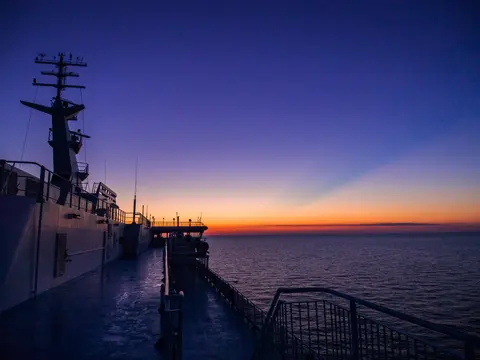
Ajaccio, the vibrant capital of Corsica, enchants visitors with its rich history as Napoleon's birthplace and its stunning coastal views. Don't miss trying local delicacies like figatellu and brocciu, and explore the nearby picturesque villages. The best season to visit is during the mild spring or fall months, when the weather is pleasant and the crowds are fewer.
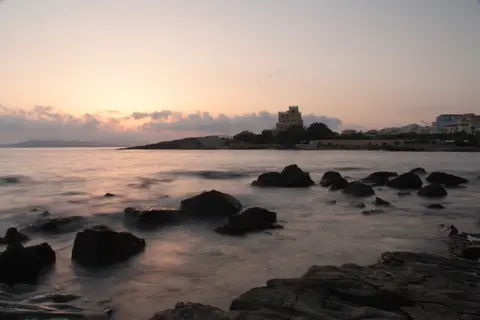
Alghero is Sardinia's Catalan jewel, a medieval walled town where bilingual street signs, fourteenth-century Aragonese fortifications, and the spectacular Neptune's Grotto sea cave create the island's most culturally distinctive coastal experience. Visit May through October via Silversea or Explora Journeys for sunset wall walks, the 656-step cliff descent to Neptune's Grotto, and lobster alla catalana served within the honey-colored ramparts of a city that bridges Barcelona and Sardinia.
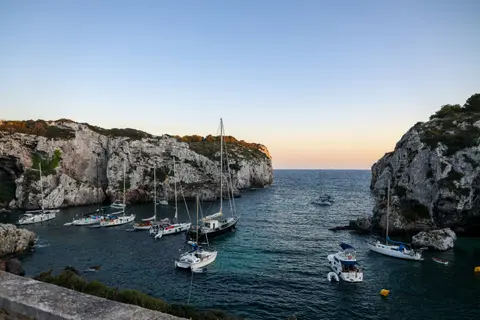
Mahón commands one of the Mediterranean's deepest natural harbours, a fjord-like inlet on Menorca that captivated British admirals, Phoenician traders, and Roman generals in turn — its Georgian townhouses and gin distilleries speaking eloquently to centuries of contested heritage. Explore the clifftop old town's baroque Santa María church with its 3,200-pipe organ, then cross the water to the imposing fortress of La Mola for sweeping harbour views. The island's prized caldereta de langosta, a slow-simmered lobster stew, is best savoured at the fishing village of Fornells. Visit between May and June or September and October for warmth without the summer crowds.
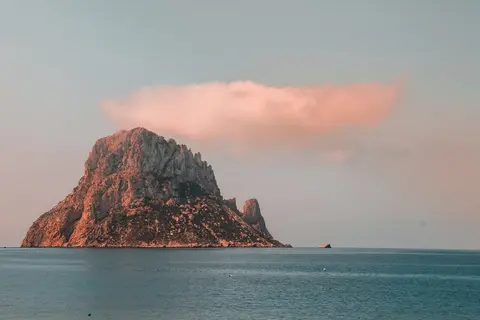
Beneath Ibiza's sun-drenched reputation as the world's clubbing capital lies a layered history stretching back to Phoenician traders who settled this Balearic island in 654 BC. The UNESCO-listed Dalt Vila — the walled hilltop citadel above Eivissa town — rewards exploration with Carthaginian burial grounds, Renaissance ramparts, and sweeping Mediterranean panoramas. For quieter pleasures, the crystalline coves of the island's north, such as Cala d'en Serra and Es Portitxol, rival any beach in Europe. The Phoenician necropolis of Puig des Molins is unmissable for history devotees. The season runs May through October, with June and September offering ideal weather without peak-summer crowds.
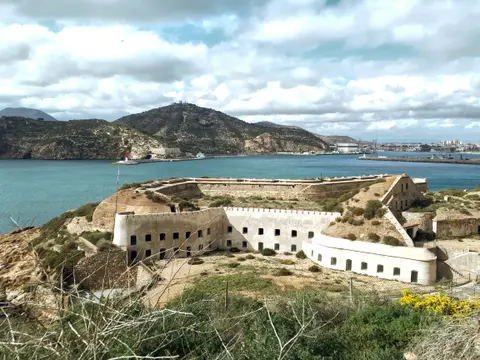
Cartagena, Spain, is a storied Mediterranean port city founded by the Carthaginians in 227 BC, where a spectacularly preserved Roman Theatre and Modernista architecture reveal layers of civilisation along a sheltered natural harbour. Visitors should not miss the caldero rice at a harbourside restaurant and a morning exploring the archaeological quarter from the Roman Forum to the Punic Wall. The mild Murcian climate makes autumn through late spring ideal, when temperatures invite leisurely wandering without the intensity of high summer.
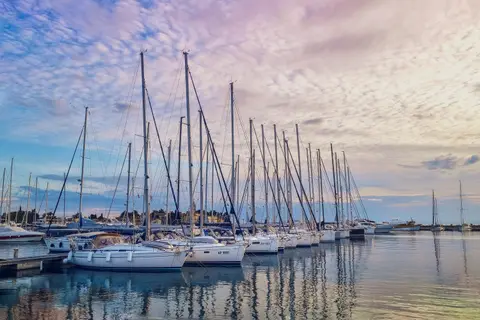
Motril, a captivating port on the Costa Tropical, shines with its rich history and unique blend of cultures, making it a perfect stop for travelers seeking both relaxation and local charm. Must-try experiences include savoring *tortilla del Sacromonte* and visiting the Mercado Municipal de Abastos. The best time to visit is in spring or fall, when the mild climate and local festivities create an enchanting atmosphere.
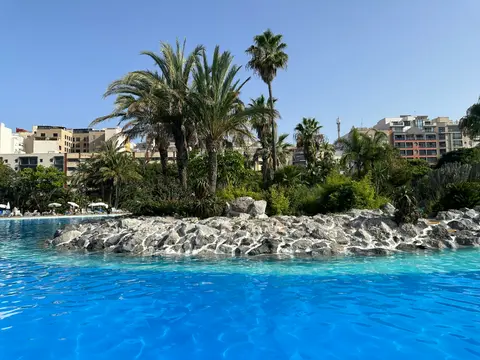
Ceuta is a Spanish enclave on the African coast at the Strait of Gibraltar, where European and Moroccan cultures intertwine within dramatic fortifications dating to the Age of Discovery. Must-see experiences include the Royal Walls, Monte Hacho's panoramic views across three waters, and tapas-meets-tagine cuisine. April through October offers the best weather for exploring this unique crossroads.
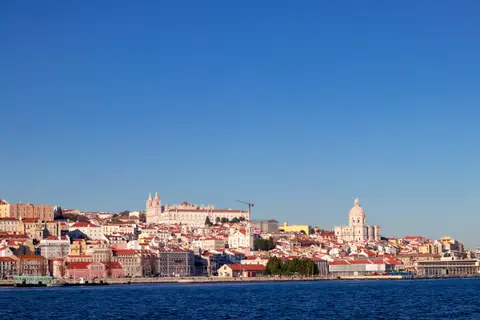
Lisbon, Portugal's enchanting capital, stands out for its rich history, stunning architecture, and vibrant culture. Must-try experiences include savoring local dishes like bacalhau à brás and pastéis de nata at Mercado da Ribeira. The best time to visit is during the spring or fall, when the weather is mild and the city is alive with festivals and events.
Day 1
For more than fifteen centuries, Istanbul has been the pivot upon which empires turned — Byzantium, Constantinople, the Ottoman capital — and nowhere else on earth compresses so much history into a single horizon. The Hagia Sophia, the Blue Mosque, and the Topkapi Palace form an incomparable trinity of architectural genius along the Golden Horn; the Grand Bazaar's four thousand shops offer a sensory immersion unlike any other marketplace. Must-dos include a Bosphorus sunset cruise and a meal of mezze along the waterfront at Karaköy. Spring (April–May) and autumn (September–October) offer the most gracious climate for this inexhaustible city.
Day 2
Çanakkale is a vibrant Turkish university town commanding the Dardanelles strait, serving as the gateway to ancient Troy and the Gallipoli battlefields—two of the most emotionally powerful historical sites in the world. Must-dos include the Troy archaeological site and museum, Gallipoli memorials, and waterfront meyhane dining with fresh Dardanelles seafood. April through October is ideal, with spring best for Anzac Day and wildflower-covered battlefields.
Day 3
Seattle, the Pacific Northwest's rain-kissed metropolis, commands one of America's most spectacular urban settings — a skyline of glass towers reflected in Elliott Bay with the white cone of Mount Rainier presiding over the horizon on clear days. Pike Place Market, one of the oldest and most vibrant public markets in the country, overflows with Dungeness crab, wild salmon, and blooms of tulips from the Skagit Valley. The neighbourhood of Capitol Hill pulses with independent bookshops and craft breweries; the Space Needle delivers sweeping views of the Cascades and the Olympic Peninsula. Summer, from June through September, offers Seattle's most generous sunshine.
Day 4
Castries, the capital of St. Lucia, is a vibrant port steeped in history and culture, offering stunning architecture and a lively market atmosphere. Must-do experiences include savoring the national dish, green fig and saltfish, and exploring the picturesque Marigot Bay. The best time to visit is during the dry season from December to April, when the weather is perfect for exploring this Caribbean gem.
Day 5
Rhodes, Greece's resplendent Dodecanese jewel, merges a UNESCO-listed Medieval Old Town built by the Knights of St. John with sun-soaked Aegean beauty just seven miles from the Turkish coast. Wander the Street of the Knights before tasting *pitaroudia* fritters and local Athiri wine at an Old Town taverna, then take a catamaran to the neoclassical harbor of Symi. The island basks in over 300 days of sunshine annually, with April through June and September through October offering ideal temperatures for exploration without the peak-summer crowds.
Day 6
Day 7
Spetses is an aristocratic Saronic Gulf island renowned for its neoclassical mansions, car-free harbour, and heroic role in the Greek War of Independence under the legendary Bouboulina. Must-dos include visiting the Bouboulina Museum, swimming at Agioi Anargyroi beach, and lingering at the Dapia's waterfront cafés. May through October offers perfect conditions, with the September Armata festival providing a spectacular historical reenactment.
Day 8
Piraeus, the bustling port city of Athens, is a vibrant blend of ancient history and modern charm, inviting travelers to explore its rich culture. Must-do experiences include savoring traditional Greek dishes at the Varvakeios Agora and embarking on day trips to nearby islands like Symi and Nydri. The best time to visit is during the spring and fall when the weather is pleasant and the tourist crowds are fewer.
Day 9
Nafplion, the first capital of modern Greece, is a refined Peloponnesian port town where Venetian architecture, Byzantine churches, and neoclassical elegance converge along one of the Mediterranean's most beautiful waterfronts. Climb the 999 steps to the Palamidi Fortress for commanding views of the Argolic Gulf, then descend for an afternoon tasting Agiorgitiko wines in the nearby Nemean valley. The best months to visit are April through June and September through October, when mild temperatures and fewer crowds allow the town's intimate charm to shine.
Day 10
Katakolon is the unassuming port that holds an extraordinary secret: just fourteen kilometres inland lies ancient Olympia, birthplace of the Olympic Games and one of the most sacred sites in the ancient world. The Archaeological Museum of Olympia — housing the breathtaking sculptures from the Temple of Zeus — ranks among Greece's finest, while walking the original stadium still sends a current of wonder through even the most seasoned traveller. The village itself charms with whitewashed tavernas and a relaxed pace that feels authentically Greek. Katakolon is best visited April through October; late spring and early autumn offer ideal temperatures for the Olympia excursion.
Day 11
Where Homer placed the island of the Phaeacians and four centuries of Venetian rule left their most enduring Mediterranean legacy, Corfu is a singular island of extraordinary historical depth and natural beauty. The UNESCO-listed Old Town — its narrow Kantounia alleyways, the elegant Liston arcade, and twin Venetian fortresses — is the finest preserved Venetian streetscape in Greece. Beyond the town, secret coves, olive groves of immense antiquity, and mountain villages offer weeks of unhurried discovery. May through June and September offer perfect conditions: warm sea temperatures, clear skies, and the island before or after its summer crescendo.
Day 12
Sarandë is Albania's Ionian coast jewel, where the UNESCO-listed Butrint archaeological marvel and the impossibly turquoise Blue Eye spring create a Mediterranean experience rivaling Greece at a fraction of the cost. Visit June via Emerald Yacht Cruises or Virgin Voyages for six-civilization archaeological sites and Albania's exciting Mediterranean frontier.
Day 13
Day 14
Naples — Napoli — is Europe's most operatically alive city, a sun-battered baroque metropolis where Vesuvius broods on the horizon and the streets below pulse with 2,500 years of continuous human drama. The unmissable Museo Archeologico Nazionale houses the world's finest collection of artefacts from Pompeii and Herculaneum, while the Spaccanapoli, the arrow-straight artery that has bisected the city since Greek times, delivers an unfiltered encounter with Neapolitan life. A single slice of pizza Margherita from one of the centro storico's historic pizzerias is a culinary pilgrimage in itself. Visit between April and June or September and October for warmth, manageable crowds, and the city at its golden best.
Day 15
Rome's ancient maritime gateway since the Emperor Trajan commissioned its harbour in 106 AD, Civitavecchia is the natural prologue to the Eternal City — just seventy minutes southeast by express rail. The port's Renaissance fortress, designed in part by Michelangelo, anchors a working waterfront that has welcomed travellers for millennia. Beyond Rome's unmissable monuments, consider an afternoon in the Civitavecchia thermal baths, drawing on mineral waters prized since antiquity. Spring and autumn offer the ideal balance of mild weather and manageable crowds for exploring the capital's layered history.
Day 16
Ajaccio, the vibrant capital of Corsica, enchants visitors with its rich history as Napoleon's birthplace and its stunning coastal views. Don't miss trying local delicacies like figatellu and brocciu, and explore the nearby picturesque villages. The best season to visit is during the mild spring or fall months, when the weather is pleasant and the crowds are fewer.
Day 17
Alghero is Sardinia's Catalan jewel, a medieval walled town where bilingual street signs, fourteenth-century Aragonese fortifications, and the spectacular Neptune's Grotto sea cave create the island's most culturally distinctive coastal experience. Visit May through October via Silversea or Explora Journeys for sunset wall walks, the 656-step cliff descent to Neptune's Grotto, and lobster alla catalana served within the honey-colored ramparts of a city that bridges Barcelona and Sardinia.
Day 18
Mahón commands one of the Mediterranean's deepest natural harbours, a fjord-like inlet on Menorca that captivated British admirals, Phoenician traders, and Roman generals in turn — its Georgian townhouses and gin distilleries speaking eloquently to centuries of contested heritage. Explore the clifftop old town's baroque Santa María church with its 3,200-pipe organ, then cross the water to the imposing fortress of La Mola for sweeping harbour views. The island's prized caldereta de langosta, a slow-simmered lobster stew, is best savoured at the fishing village of Fornells. Visit between May and June or September and October for warmth without the summer crowds.
Day 19
Beneath Ibiza's sun-drenched reputation as the world's clubbing capital lies a layered history stretching back to Phoenician traders who settled this Balearic island in 654 BC. The UNESCO-listed Dalt Vila — the walled hilltop citadel above Eivissa town — rewards exploration with Carthaginian burial grounds, Renaissance ramparts, and sweeping Mediterranean panoramas. For quieter pleasures, the crystalline coves of the island's north, such as Cala d'en Serra and Es Portitxol, rival any beach in Europe. The Phoenician necropolis of Puig des Molins is unmissable for history devotees. The season runs May through October, with June and September offering ideal weather without peak-summer crowds.
Day 20
Cartagena, Spain, is a storied Mediterranean port city founded by the Carthaginians in 227 BC, where a spectacularly preserved Roman Theatre and Modernista architecture reveal layers of civilisation along a sheltered natural harbour. Visitors should not miss the caldero rice at a harbourside restaurant and a morning exploring the archaeological quarter from the Roman Forum to the Punic Wall. The mild Murcian climate makes autumn through late spring ideal, when temperatures invite leisurely wandering without the intensity of high summer.
Day 21
Motril, a captivating port on the Costa Tropical, shines with its rich history and unique blend of cultures, making it a perfect stop for travelers seeking both relaxation and local charm. Must-try experiences include savoring *tortilla del Sacromonte* and visiting the Mercado Municipal de Abastos. The best time to visit is in spring or fall, when the mild climate and local festivities create an enchanting atmosphere.
Day 22
Ceuta is a Spanish enclave on the African coast at the Strait of Gibraltar, where European and Moroccan cultures intertwine within dramatic fortifications dating to the Age of Discovery. Must-see experiences include the Royal Walls, Monte Hacho's panoramic views across three waters, and tapas-meets-tagine cuisine. April through October offers the best weather for exploring this unique crossroads.
Day 23
Day 24
Lisbon, Portugal's enchanting capital, stands out for its rich history, stunning architecture, and vibrant culture. Must-try experiences include savoring local dishes like bacalhau à brás and pastéis de nata at Mercado da Ribeira. The best time to visit is during the spring or fall, when the weather is mild and the city is alive with festivals and events.
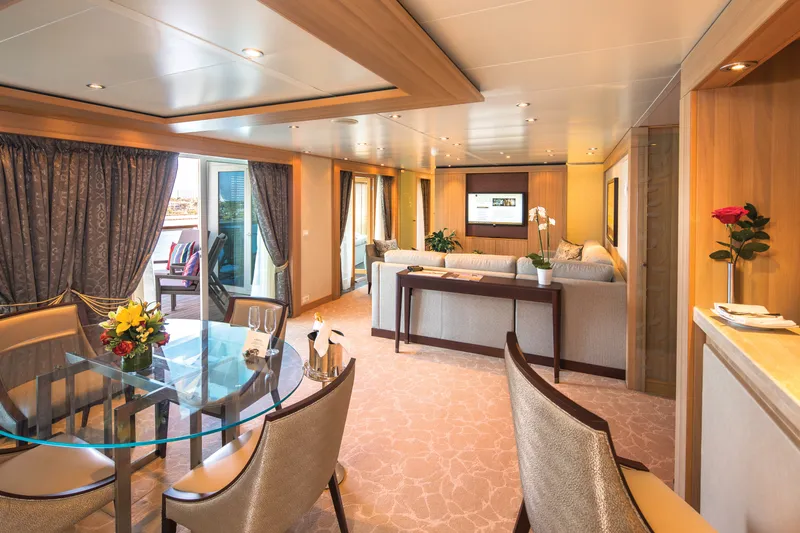
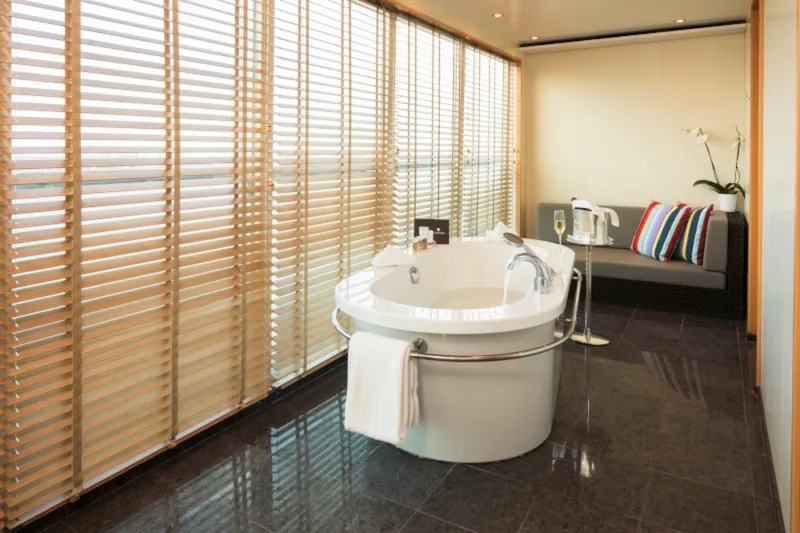
Approximately 1189 square feet (110 square meters) of inside space, plus two verandas totaling 214 square feet (20 square meters)
Grand Wintergarden Suites feature
Large windows
Dining for six
Glass-enclosed solarium with tub and day bed
Two bedrooms
Two bathrooms (one whirlpool)
Guest bath
Convertible sofa bed for one
Pantry with wet bar
Three flat-screen TVs
Complimentary internet/Wi-Fi service
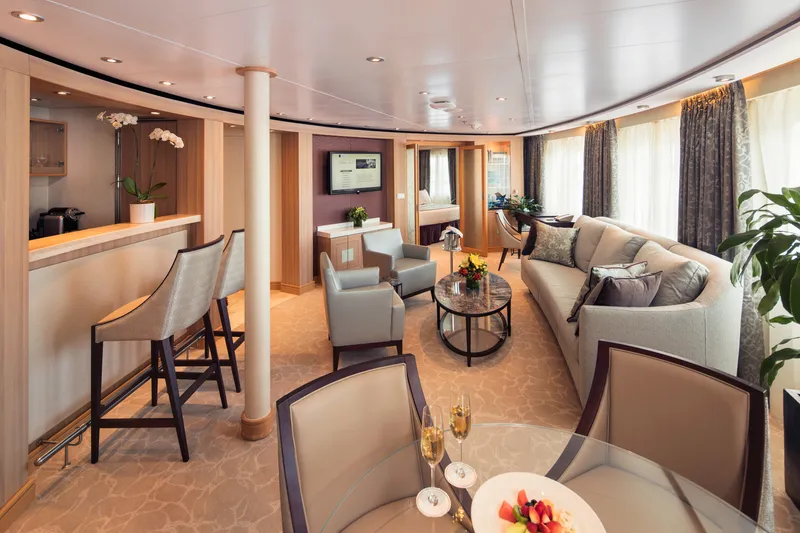
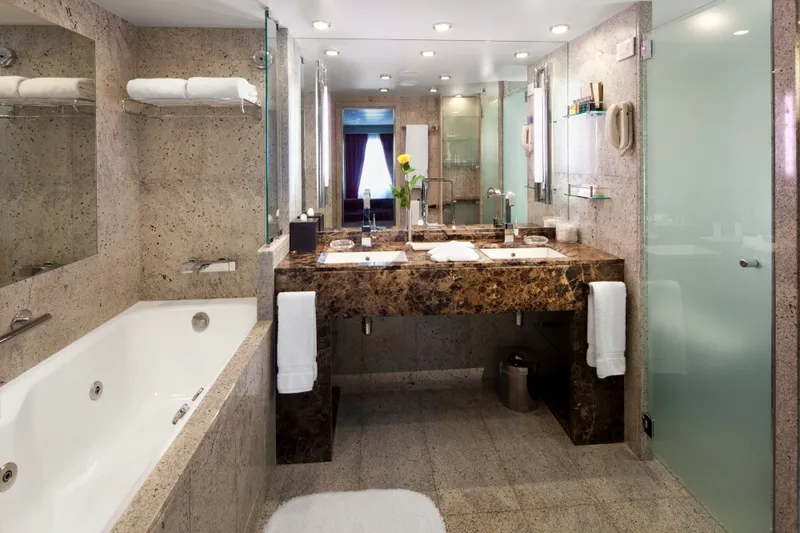

Approximately 526 & 593 square feet (49 to 55 square meters) of inside space, plus one veranda of 133 & 354 square feet (12 to 33 square meters)
Owner's Suites feature:
Expansive ocean views
Forward-facing windows
Dining for four to six
Bathroom with whirlpool bathtub
Guest bath
Pantry with wet bar
Two flat-screen TVs
Complimentary Internet/Wi-Fi service
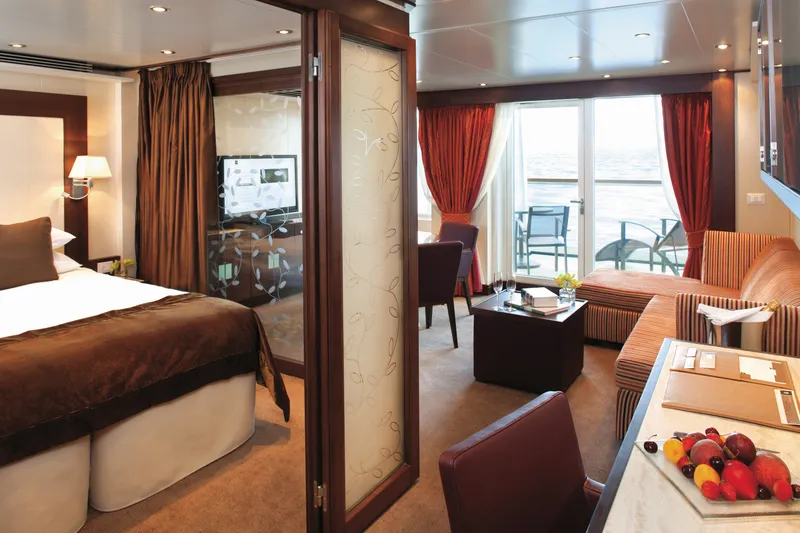
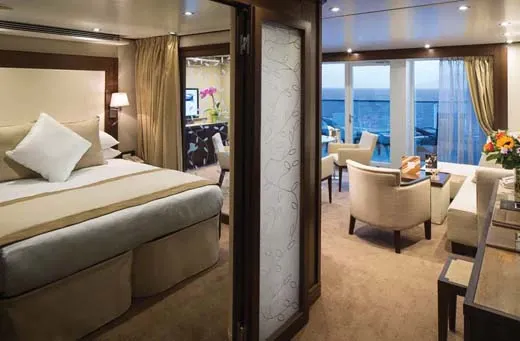
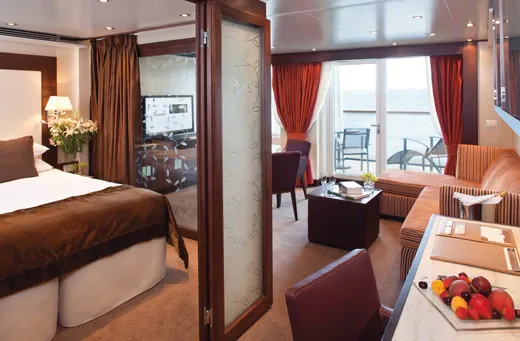
Penthouse Spa Suite
Approximately 536 to 539 square feet (50 square meters) of inside space, plus one veranda of 167 to 200 square feet (16 to 19 square meters)
All Penthouse Spa Suite feature:
Dining table for two to four
Separate bedroom
Glass door to veranda
Two flat-screen TVs
Fully stocked bar
Spacious bathroom with tub, shower and large vanity.
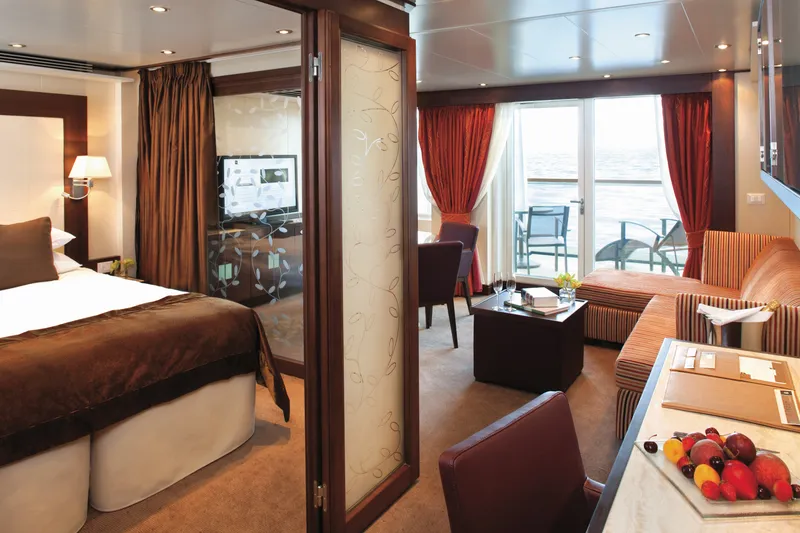

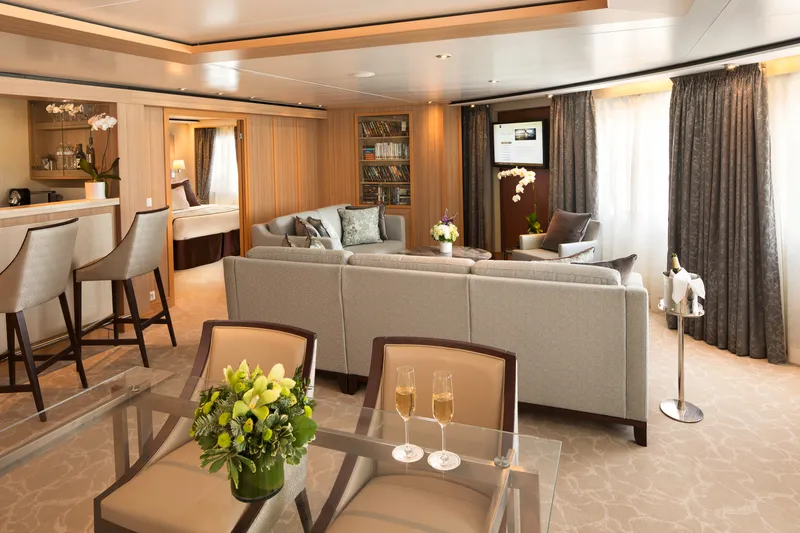
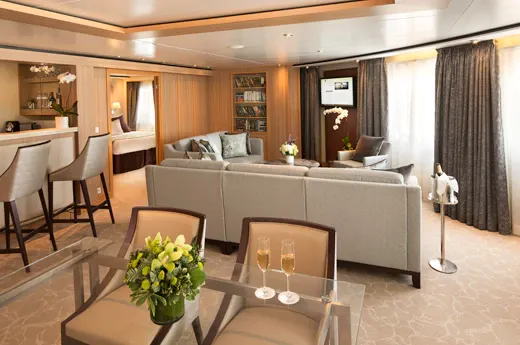
Penthouse Suite
Approximately 436 square feet (41 square meters) of inside space, plus one veranda of 98 square feet (9 square meters)
All Penthouse Suite feature:
Dining table for two to four
Separate bedroom
Glass door to veranda
Two flat-screen TVs
Fully stocked bar
Spacious bathroom with tub, shower and large vanity.
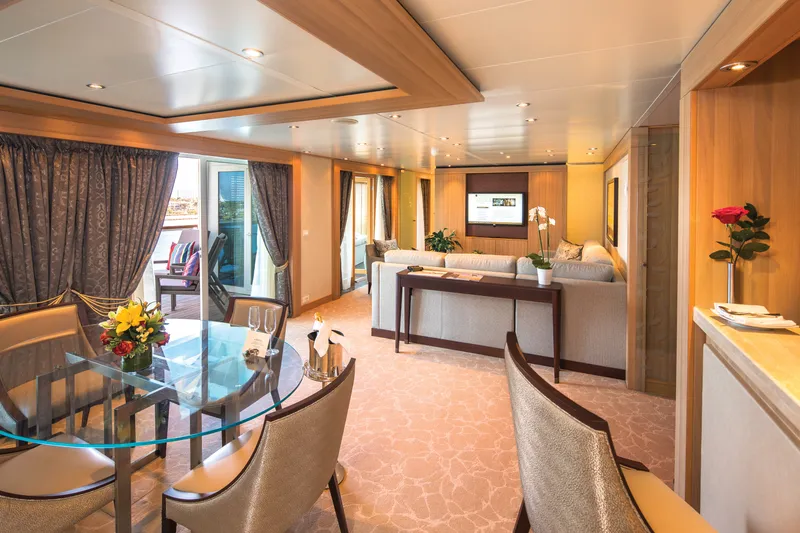
Signature Suite
Approximately 859 square feet (80 square meters) of inside space, plus one veranda of 493 square feet (46 square meters)
Signature Suites feature:
Expansive ocean views
Forward-facing windows
Dining for four to six
Bathroom with whirlpool bathtub
Guest bath
Pantry with wet bar
Two flat-screen TVs
Complimentary Internet/Wi-Fi service
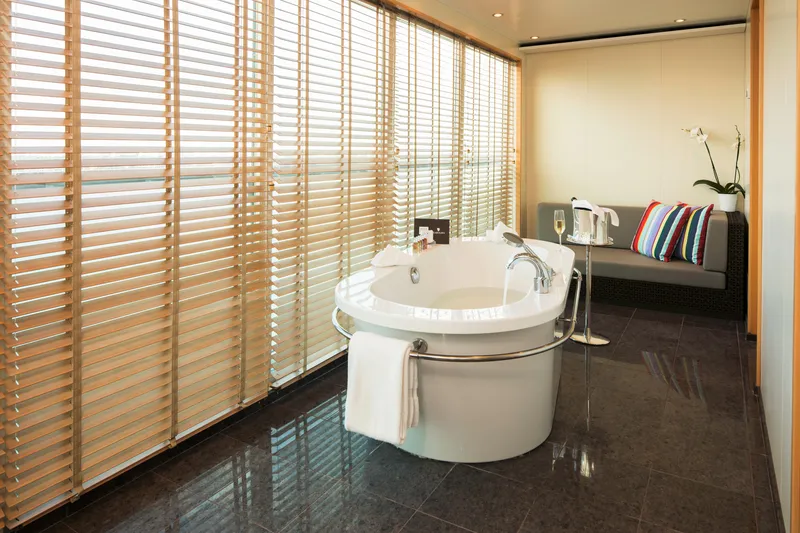
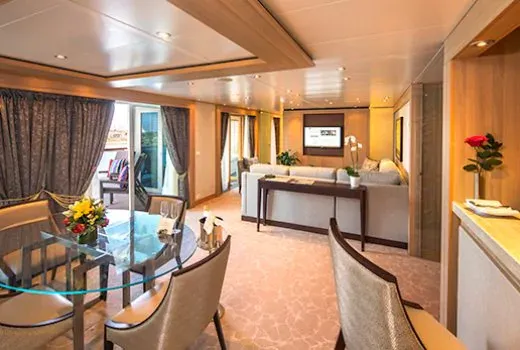
Approximately 914 square feet (85 square meters) of inside space, one veranda of 183 sq. ft. (17 square meters.).
Wintergarden Suites feature
Large windows
Dining for six
Whirlpool bathtub
Guest bath
Convertible sofa bed for one
Pantry with wet bar
Glass-enclosed solarium with tub and day bed
Two closets
Two flat-screen TVs
Complimentary Internet/Wi-Fi service
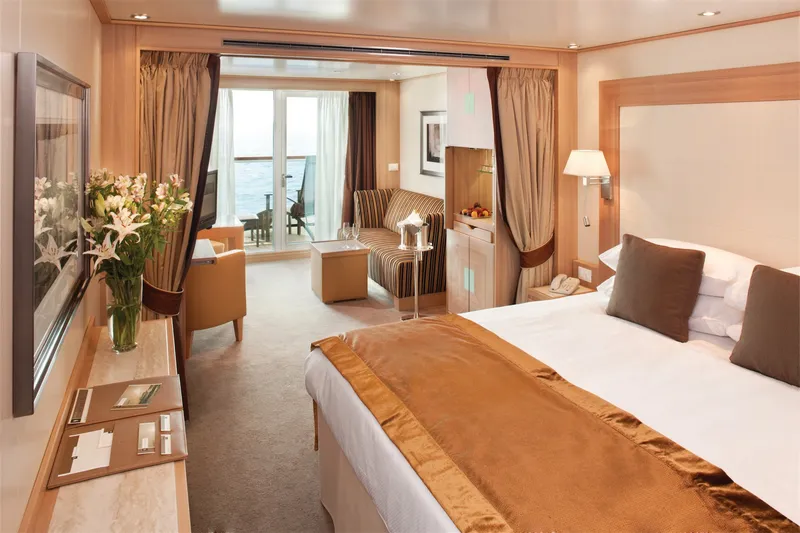
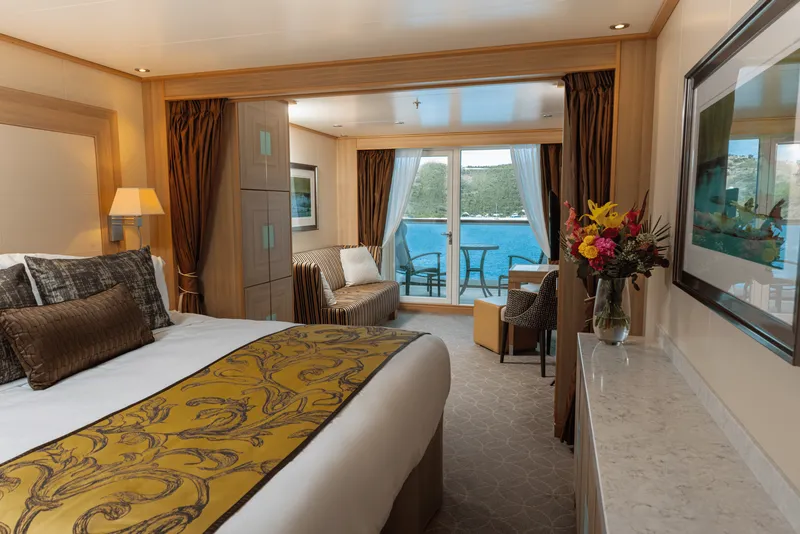
Located on Deck 7; Approximately 300 square feet (28 square meters) of inside space, plus one veranda of 65 square feet (6 square meters)
All Veranda Suites feature:
A full-length window and glass door to private veranda
Comfortable living area
Queen-size bed or two twin beds
Dining table for two
Walk-in closet
Interactive flat-screen television with music and movies
Fully stocked bar and refrigerator
Makeup vanity
Spacious bathroom with separate tub and shower
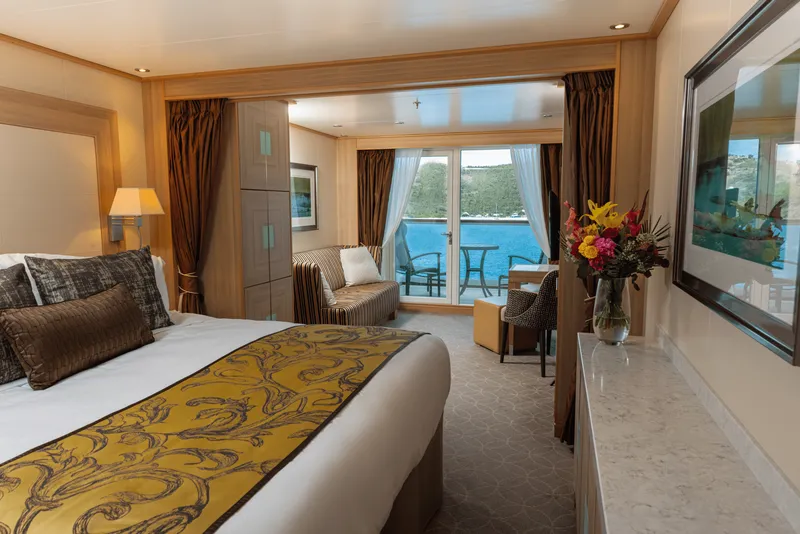
Veranda Suite Guarantee
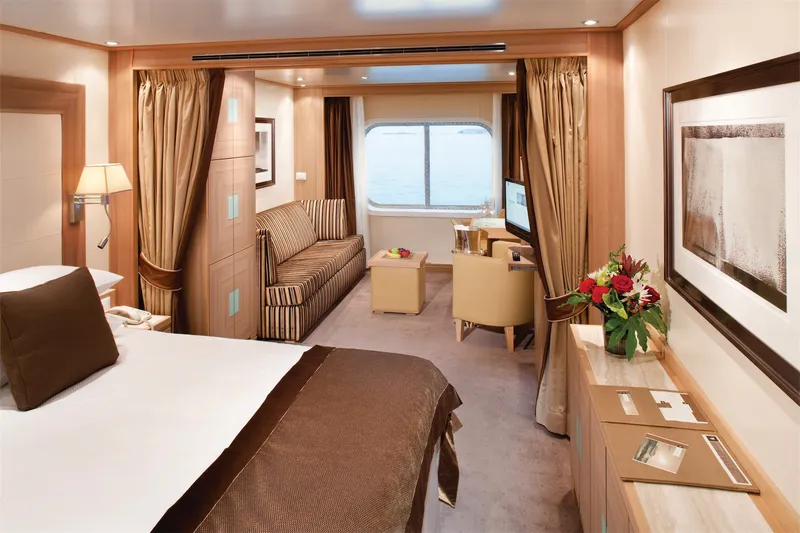
Located on Deck 4; Approximately 295 square feet (28 square meters) of inside space
All Ocean View Suites feature:
A large picture window
Comfortable living area
Queen-size bed or two twin beds
Dining table for two
Walk-in closet
Interactive flat-screen television with music and movies.
Fully stocked bar and refrigerator
Makeup vanity
Spacious bathroom with separate tub and shower
Our cruise specialists can help you find the perfect cabin and the best available pricing.
(+886) 02-2721-7300Contact Advisor